The four types of sharpener
- Whetstone: the best edge and the longest knife life, but it takes a little practice.
- Honing rod (steel or ceramic): keeps the edge straight between sharpenings. Fast and easy.
- Pull-through sharpener: quick and beginner-friendly, but removes more metal.
- Electric sharpener: very fast, but aggressive. Use sparingly.
Whetstones: our top pick
A combination whetstone with 1000 grit on one side and 6000 on the other is ideal for the Matsato. Use the 1000 side to restore the edge and the 6000 side to polish it. Good stones cost around £20–£35 and last for years.
Hold the blade at about 15 degrees and keep that angle steady. Our step-by-step sharpening guide walks you through it.
Honing rods: for weekly upkeep
A honing rod doesn't remove much metal. It realigns the edge, which naturally rolls slightly with use. Five or six light strokes per side each week keeps the Matsato feeling sharp for much longer between proper sharpenings. Ceramic rods are a touch more effective than plain steel.
Official Matsato store
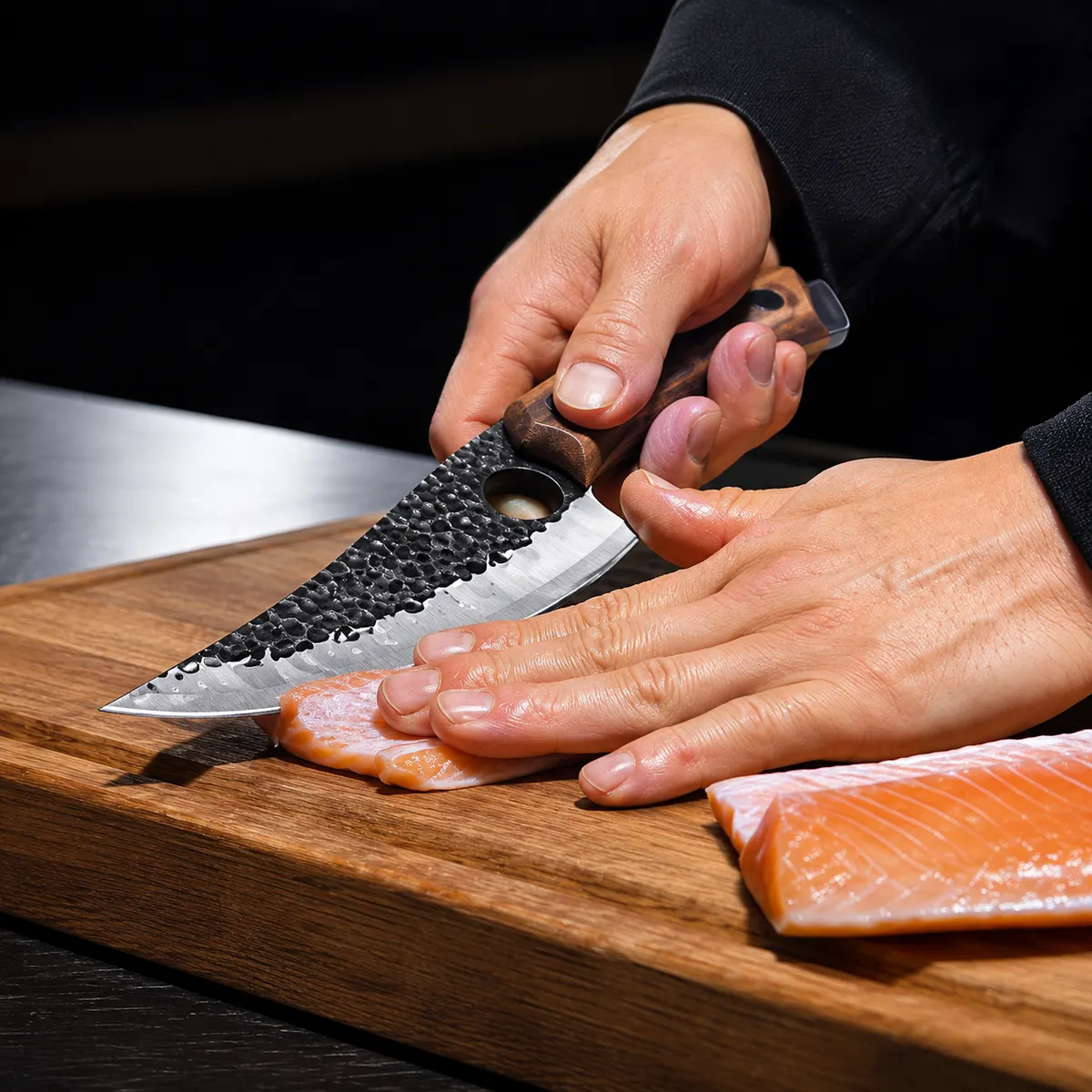
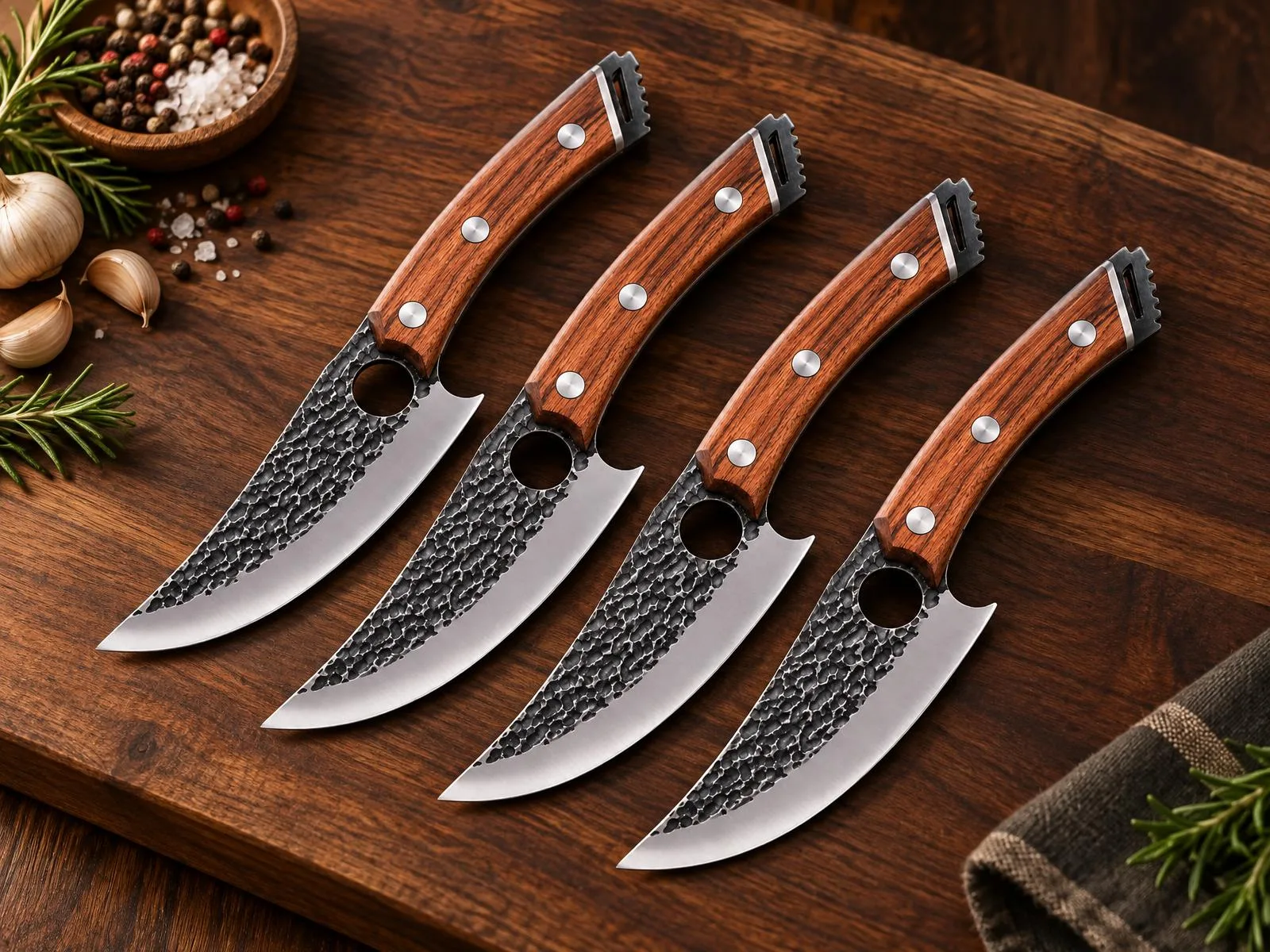
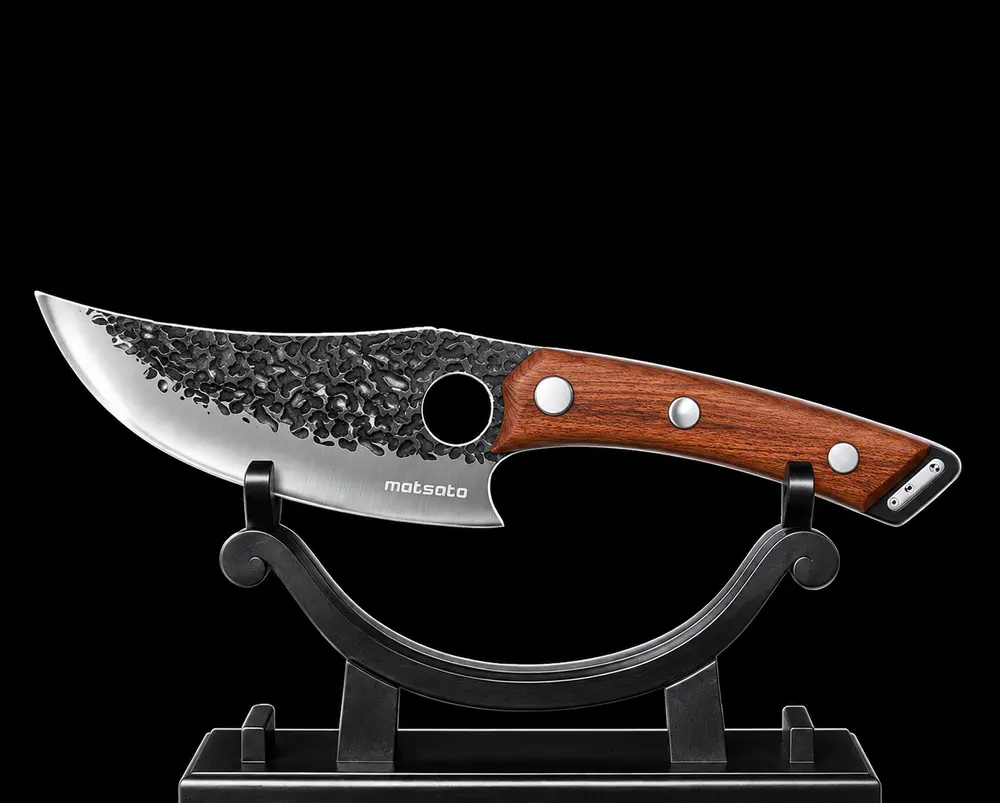
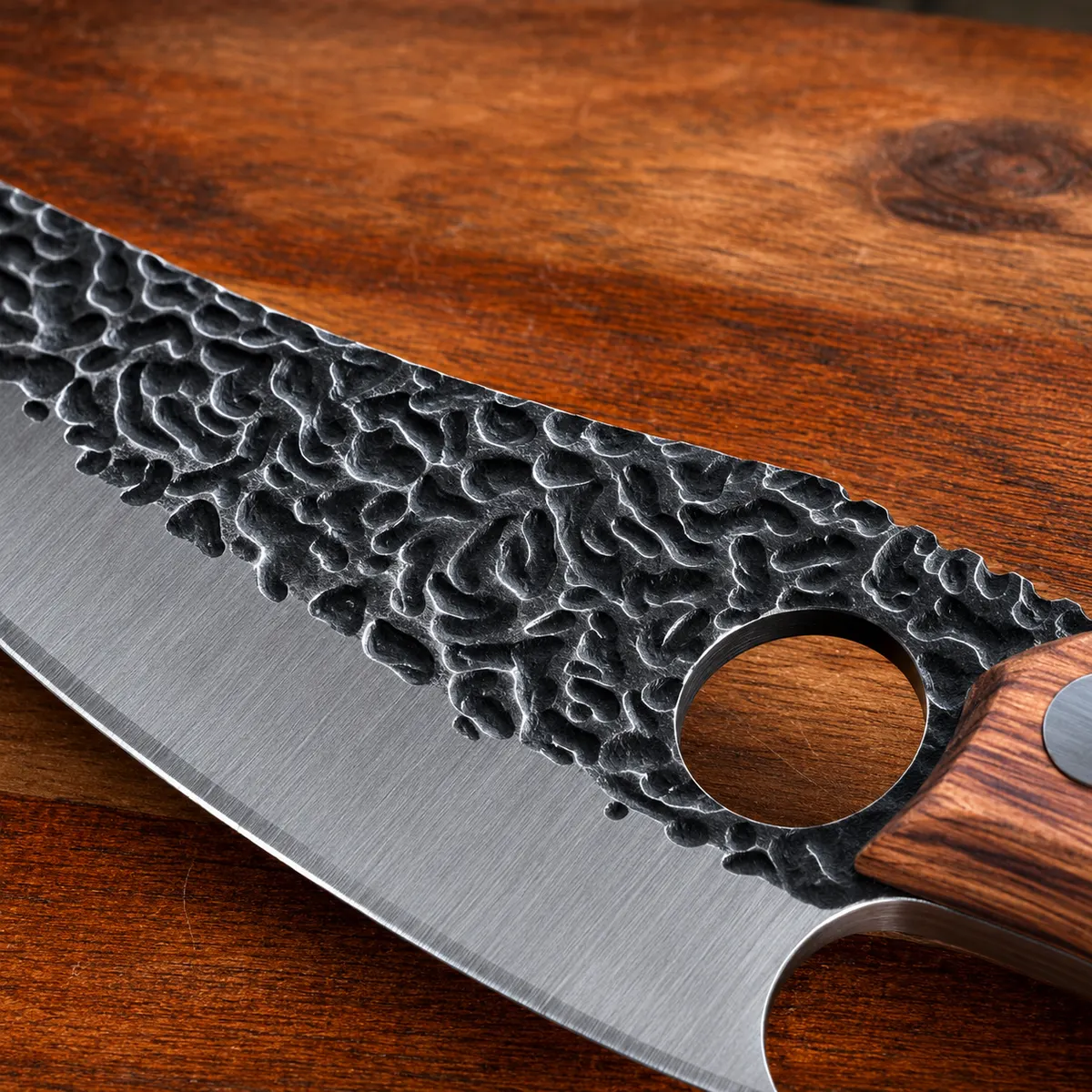
The Matsato Knife
From £29.95 £66.60 · Free UK delivery · 60-day guarantee
Pull-through sharpeners: the quick option
If you want something simple, a two-stage pull-through sharpener (coarse and fine) works. Pull heel to tip with light pressure 3–5 times per slot. Use the coarse slot only when the knife is genuinely dull, as it removes metal quickly.
Electric sharpeners
Electric sharpeners are fast, but they're aggressive and can shorten a knife's life. If you use one, choose the finest setting and only when needed.
Which should you buy?
- Best overall: 1000/6000 whetstone plus a ceramic honing rod.
- Easiest: a two-stage pull-through plus a honing rod.
- Avoid: sharpening on the back of a mug or a stone step. It scratches the hammered finish.
How to keep your Matsato sharper for longer
Cut on wood or bamboo boards, never glass, slate or ceramic. Hand-wash and dry straight away, and store on a magnetic strip or in a block so the edge doesn't knock against other utensils.
Signs your Matsato needs sharpening
- It slides off tomato or pepper skins instead of biting in.
- Onions make you cry more than usual (a dull blade crushes cells).
- You need to press down harder than before.
- It squashes soft bread or ripe fruit.
- Honing no longer brings the edge back.
What grit numbers mean
Lower grit numbers are coarser and remove metal faster; higher numbers are finer and polish the edge. Around 220–400 grit is for repairing chips, 1000 is the everyday sharpening grit, and 3000–8000 polishes. For a Matsato, a 1000/6000 combination stone covers everything a home cook needs.
Professional sharpening
If you'd rather not sharpen at home, many UK cookware shops, markets and mobile knife sharpeners offer the service for a few pounds per knife. Ask for a double-bevel edge at around 15 degrees per side.
Questions people ask
Do you sell a Matsato sharpener?
We sell the Matsato Knife only. Any good whetstone or honing rod works well with it.
What angle should I sharpen at?
About 15 degrees per side.
How often should I sharpen my Matsato?
Hone weekly and sharpen on a whetstone every 2–4 months with regular use.
Will a pull-through sharpener damage it?
Not if used gently and occasionally, but a whetstone is kinder to the edge.
Can I get my knife sharpened professionally?
Yes. Many UK cookware shops and markets offer knife sharpening services.
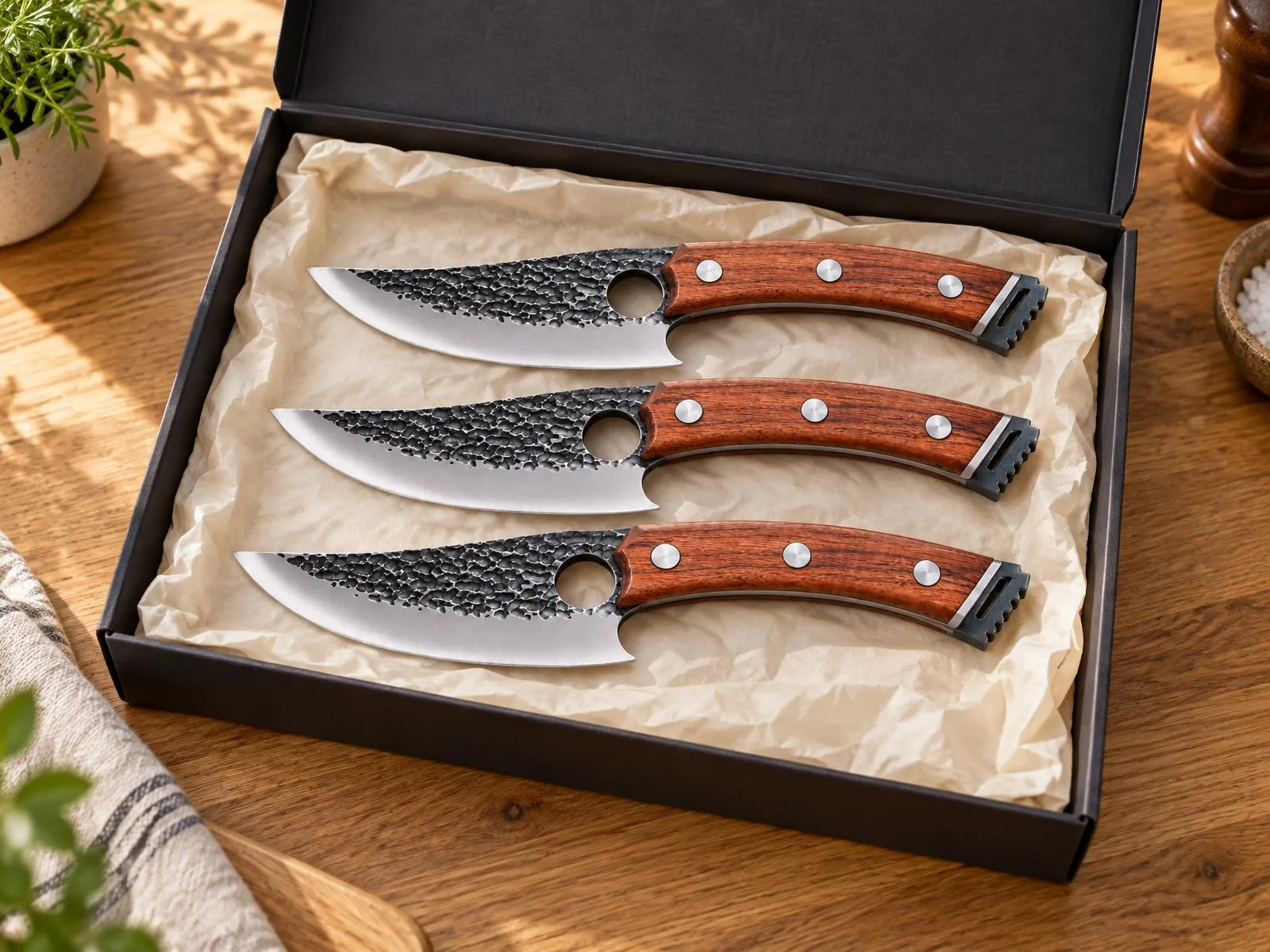
Compare Matsato bundles
| Bundle | Price | Per knife | Was |
|---|---|---|---|
| 1 × knife | £29.95 | £29.95 | |
| 2 × knifeMost popular | £49.94 | £24.97 | |
| 3 × knife | £65.94 | £21.98 | |
| 4 × knifeBest value | £79.92 | £19.98 |
Ready for a sharper kitchen?
Free UK delivery · 60-day money-back guarantee
See bundle prices from £29.95