What you'll need
Combination whetstone
1000 grit to sharpen, 6000 grit to polish. Around £20–£35.
Non-slip base
A rubber holder or a damp tea towel stops the stone sliding.
Water
A bowl to soak the stone and keep its surface wet while you work.
Honing rod
Ceramic or steel, for weekly touch-ups between sharpenings.
Clean tea towel
To wipe the blade and dry it straight away when you finish.
Paper or a tomato
The simplest way to test the edge at the end.
The short version
- 1
Soak the stone
10–15 minutes in water, then set it on a damp tea towel, coarse side up.
- 2
Hold at 15°
Roughly the height of two £1 coins under the spine. Keep it steady.
- 3
10 strokes each side
Heel to tip on the 1000 side until a burr forms, then flip the knife.
- 4
Polish and hone
Repeat lightly on the 6000 side, finish on a honing rod, test on paper.
1Choose your sharpener
A combination whetstone (1000 grit on one side, 6000 on the other) gives the best, longest-lasting edge and costs around £20–£35. A pull-through sharpener is quicker and easier but removes more metal over time. A honing steel or ceramic rod doesn't sharpen. It straightens the edge between sharpenings.
For most home cooks the best setup is a whetstone every few months plus a honing rod every week.
2Prepare the stone
Soak a water stone for 10–15 minutes until it stops releasing bubbles (splash-and-go stones just need wetting). Place it on a damp tea towel or a non-slip base with the 1000-grit side up.
3Find the right angle
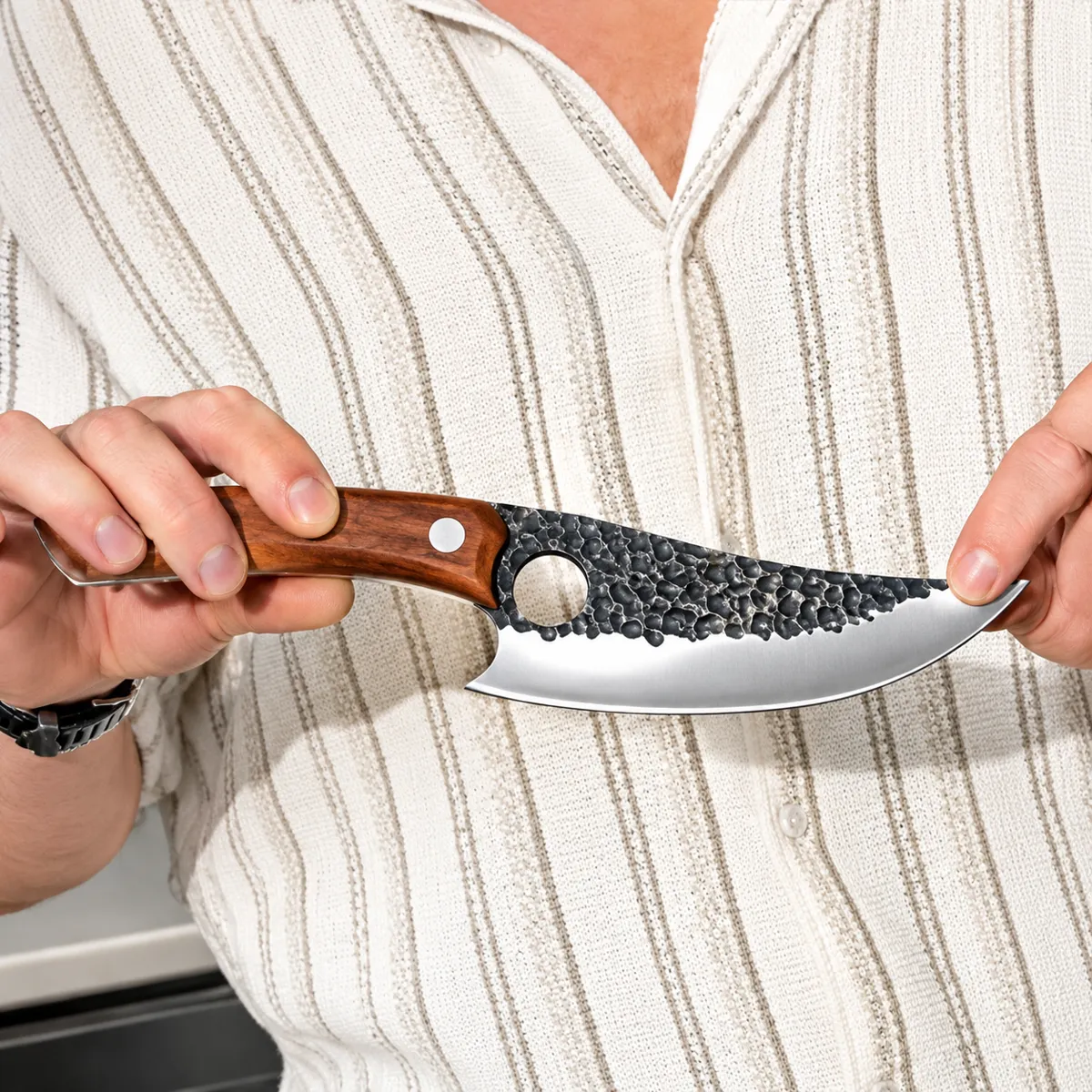
Hold the Matsato at roughly 15 degrees to the stone. A handy guide is to stack two £1 coins under the spine, note the angle, then remove them. Consistency matters more than the exact number.
Official Matsato store
The Matsato Knife
From £29.95 £66.60 · Free UK delivery · 60-day guarantee
4Sharpen the first side
With your fingertips resting lightly on the flat of the blade, push the edge across the stone from heel to tip in a smooth sweep, as if slicing a thin layer off the stone. Do about 10 strokes. You should feel a slight burr (a rough lip) form along the opposite side of the edge.
5Sharpen the second side
Turn the knife over and repeat the same number of strokes at the same angle until the burr moves to the other side. Keep the stone wet as you go.
6Polish on the fine side
Flip the stone to 6000 grit and repeat with lighter pressure, about 10 strokes per side, then a few alternating single strokes. This removes the burr and polishes a keen, smooth edge.
7Hone and test
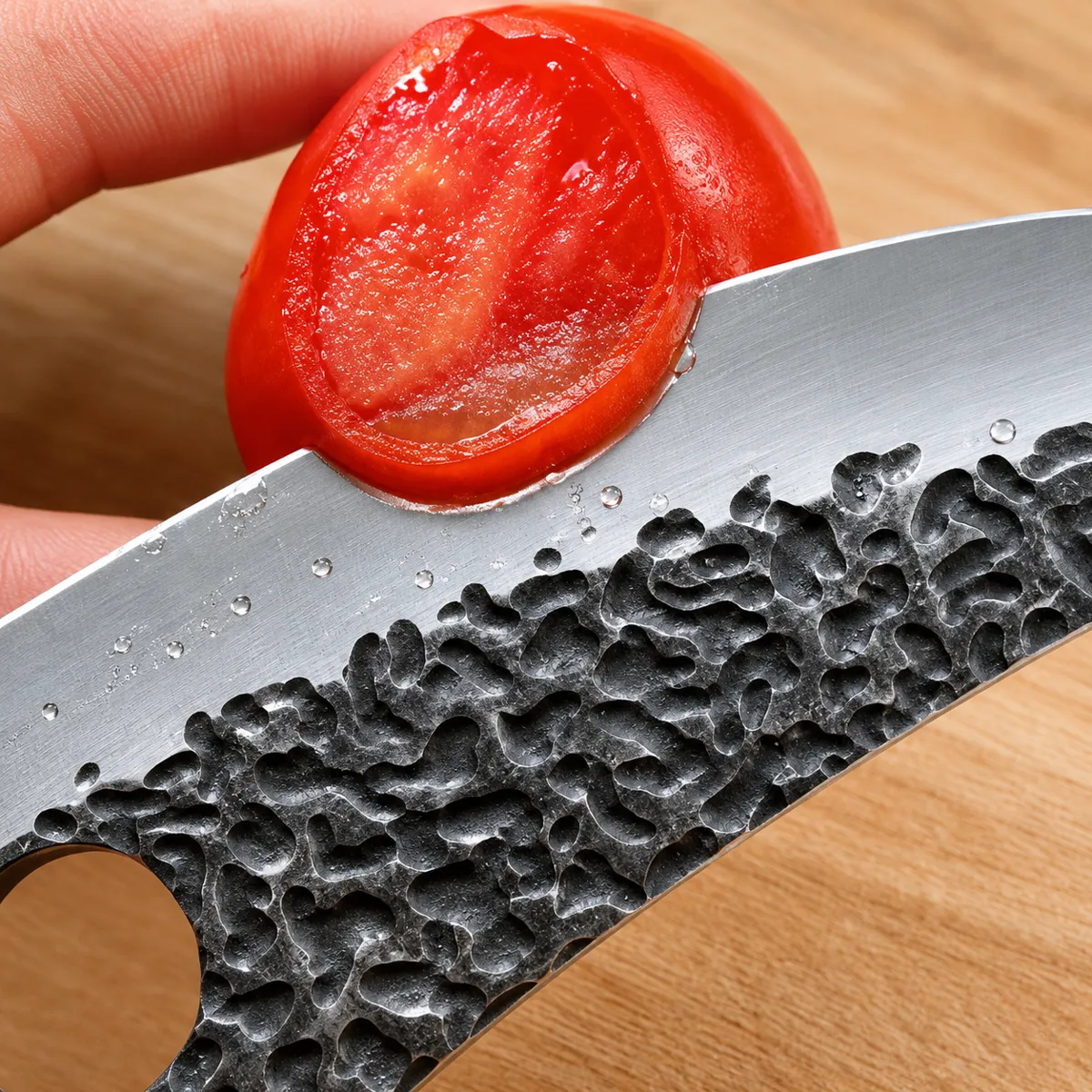
Finish with a few light strokes on a honing rod. Test by slicing a sheet of paper or a ripe tomato. The blade should glide through without catching. Rinse, dry and you're done.
Using a pull-through sharpener
If you prefer speed, draw the blade through the coarse slot 3–5 times with light pressure, then the fine slot 3–5 times. Always pull heel to tip, never saw back and forth. Use the coarse slot only when the knife is genuinely dull.
Ways to sharpen compared
There's no single "best" sharpener for everyone. Here's how the four common options compare on a Matsato:
| Method | Edge quality | Ease | Metal removed | Typical cost | Best for |
|---|---|---|---|---|---|
| Whetstone | Excellent | Takes practice | Little | £20–£35 | The sharpest, longest-lasting edge |
| Pull-through | Good | Very easy | Moderate | £10–£25 | Quick touch-ups if you don't want to learn |
| Honing rod | Restores, doesn't sharpen | Easy | Almost none | £10–£30 | Weekly upkeep between sharpenings |
| Electric | Good | Very easy | A lot | £40+ | Very dull knives; use sparingly |
How often should you sharpen?
It depends on how much you cook. Hone first; only sharpen when honing no longer brings the edge back.
| How you cook | Hone | Sharpen on a whetstone |
|---|---|---|
| Light (a few meals a week) | Every 2 weeks | Every 4–6 months |
| Regular (daily home cooking) | Weekly | Every 2–4 months |
| Heavy (batch cooking, big family) | Every few uses | Every 4–8 weeks |
Still blunt after sharpening?
If the knife still isn't cutting cleanly, one of these is usually the reason:
- No burr formed: you stopped too early. Keep going on the coarse side until you can feel a rough lip along the whole edge.
- Burr left on: finish with lighter alternating strokes on the fine side, then a few passes on the honing rod.
- The angle wobbled: rest your wrist and move from the shoulder. A marker line along the edge shows where you're actually grinding.
- Dished stone: a hollow stone rounds the edge. Flatten it and try again.
- Chipped edge: small chips need more time on the coarse side. For anything larger, contact us before grinding.
Everyday care to keep it sharp
Hand-wash in warm, soapy water and dry straight away. Never put it in the dishwasher. Cut on wood or bamboo, not glass, stone or ceramic. Store it on a magnetic strip, in a block or with a blade guard. Wipe the wooden handle dry and give it a drop of food-safe oil now and then.
Common sharpening mistakes
- Changing the angle mid-stroke, which rounds the edge instead of sharpening it.
- Pressing too hard. Let the stone do the work.
- Letting the stone dry out. Keep it wet throughout.
- Skipping the fine grit, which leaves a rough, short-lived edge.
- Sharpening on glass or the back of a mug, which scratches the hammered finish.
Looking after your whetstone
Rinse the stone after use and let it dry naturally away from direct heat. Over time the surface will dish slightly in the middle; flatten it every few months with a flattening plate or coarse sandpaper on a flat surface so your angles stay true.
Questions people ask
What angle should I sharpen a Matsato knife at?
Around 15 degrees per side works well. Keeping the angle consistent matters more than the exact number.
Can I use an electric sharpener?
You can, but they remove a lot of metal. A whetstone gives a better, longer-lasting edge.
How do I know when it needs sharpening?
If it slides off a tomato skin or squashes soft food, hone it first. If that doesn't help, it's time to sharpen.
Is honing the same as sharpening?
No. Honing straightens the existing edge. Sharpening removes a little metal to create a new edge.
How long does it take to sharpen a Matsato knife?
About 10–15 minutes on a whetstone, including soaking. Honing takes under a minute.
Can I use a pull-through knife sharpener on a Matsato?
Yes. Use light pressure, pull heel to tip, and use the coarse slot only when the knife is genuinely dull.
Does the hammered finish make sharpening harder?
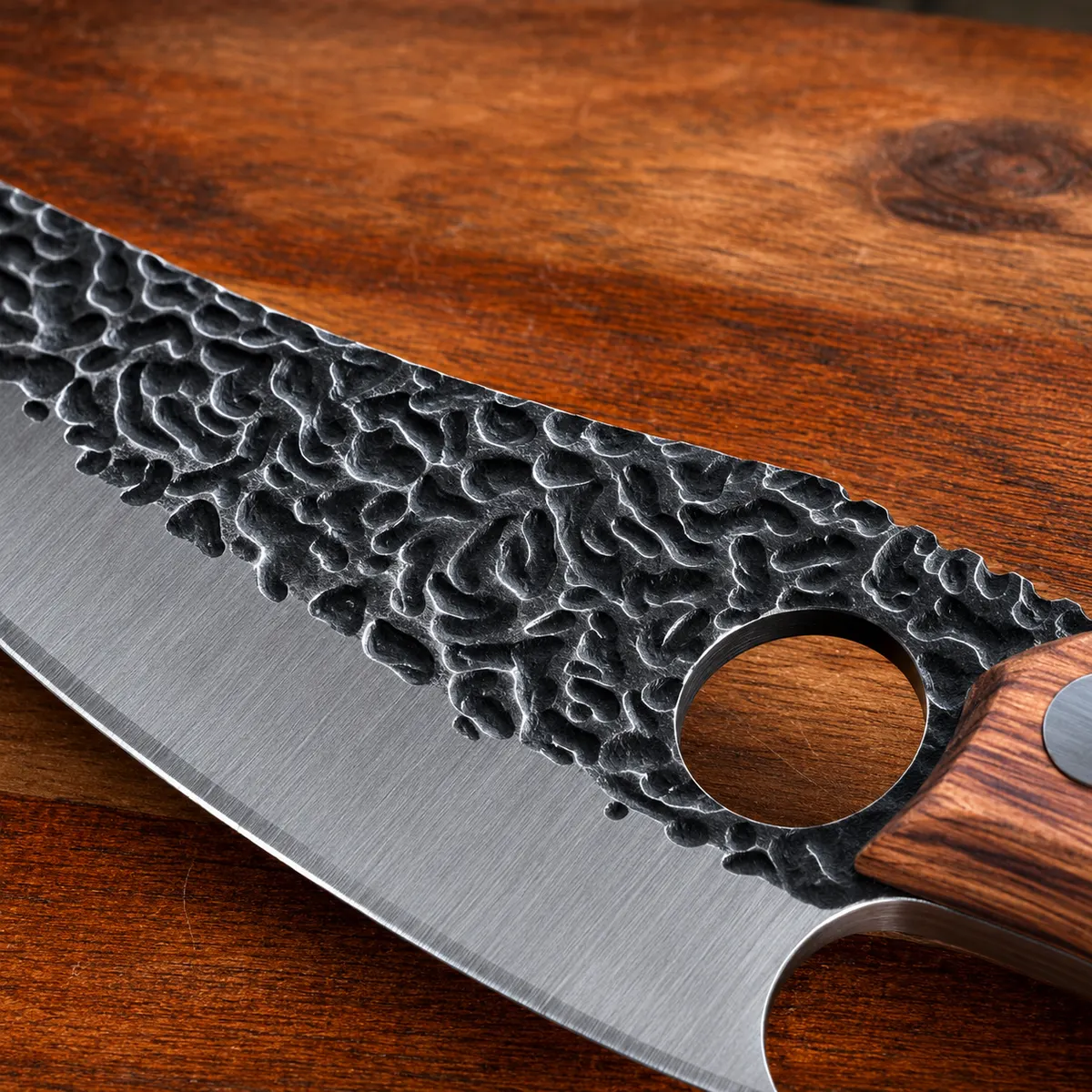
No. Only the edge touches the stone, so you sharpen it like any other kitchen knife.
Can I put my Matsato in the dishwasher?
No. Dishwashers dull the edge and can damage the wooden handle.
Compare Matsato bundles
| Bundle | Price | Per knife | Was |
|---|---|---|---|
| 1 × knife | £29.95 | £29.95 | |
| 2 × knifeMost popular | £49.94 | £24.97 | |
| 3 × knife | £65.94 | £21.98 | |
| 4 × knifeBest value | £79.92 | £19.98 |
Ready for a sharper kitchen?
Free UK delivery · 60-day money-back guarantee
See bundle prices from £29.95